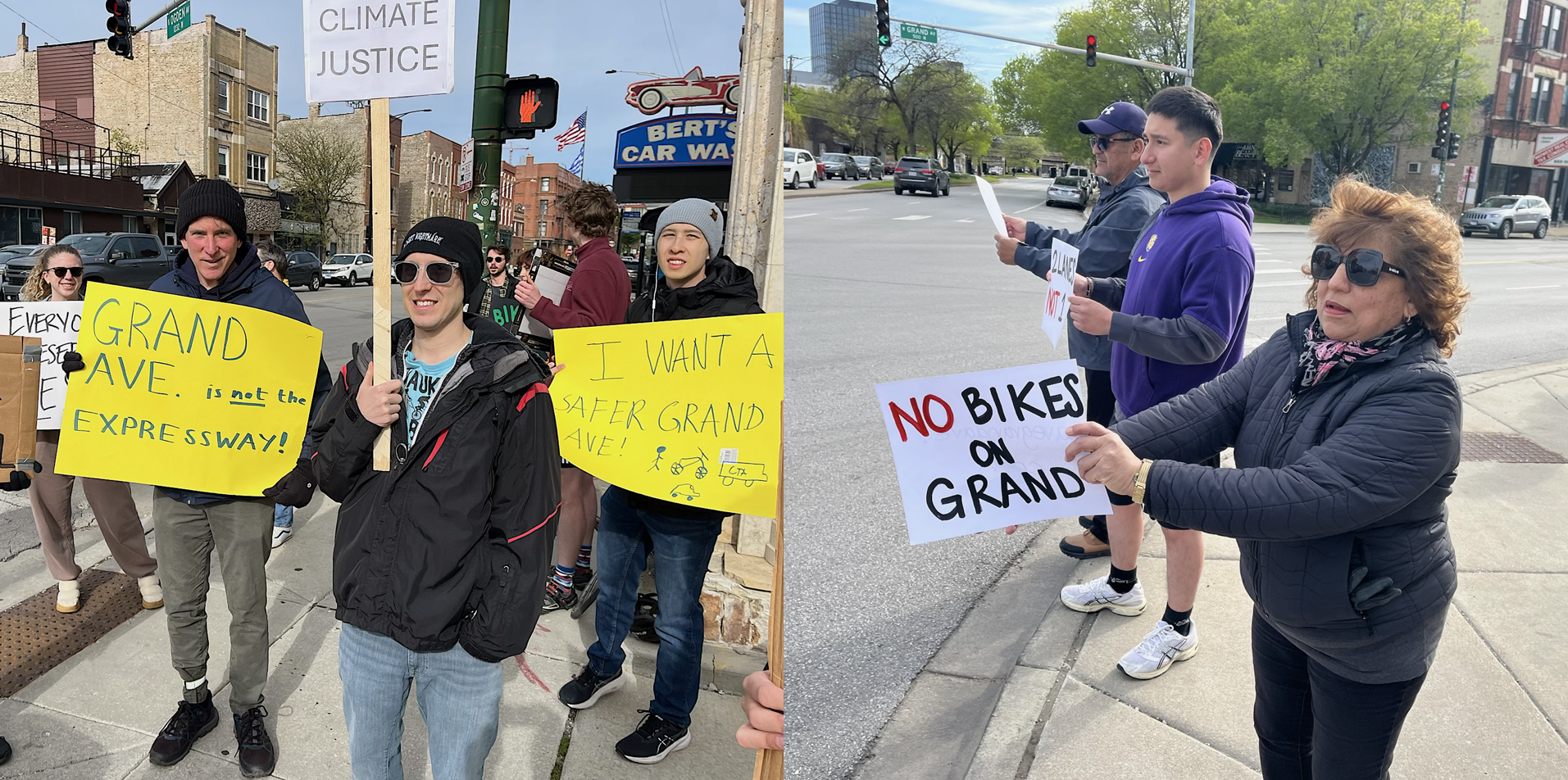
If you have ever been to a neighborhood association meeting, or a CDOT public input meeting, or a housing meeting, you will recognize this familiar situation: no matter the issue, there will be a large contingent of older, landowning residents who will do anything to prevent any kind of change to the neighborhood, good or bad. It can be intimidating to even speak up at these meetings, because this type of person is more than comfortable booing and making a scene. It can feel like there are arbitrary conditions to being a "real" member of the community - you need to own land, or be married, or have kids. You might have been told you are too young, too new, or too old.
We're here to tell you that there is no one better-qualified to decide the path forward for your block, your neighborhood, your ward, and your city than you. There is no landownership requirement for being involved in your neighborhood. There is no time limit you need to exceed in order to have an opinion. You live here. You know what it is like to live in a city with rapidly-growing rents, deteriorating public transit, empty storefronts, crumbling roads, and weakening trust in our institutions.
It doesn't have to be this way. You should have a say in fixing it.
We are a group of residents in West Town, Humboldt Park, and Logan Square who are frustrated by a system that favors wealthy, reactionary, conservative voices over all others. Classical neighborhood associations claim to speak for the community while representing a minority. They are very good at what they do. Those who wish to prevent change at all cost have had sixty years to build organizational networks of neighborhood associations and political organizations to freeze our neighborhoods in amber. The world is run by those who show up to meetings, and these people are amazing at showing up to meetings. They are always the first to know when a meeting is happening, and no matter when it is, they will show up.
Toppling this system starts with building power and local organizing. We are building a communication network of our own in order to get our members out to meetings and in front of our elected officials. This takes time and effort. Our opposition has had decades to build their network. But, we are growing every day.
Classical advocacy focuses on growing a core group of dedicated volunteers. We are taking a different approach. The organizations we are working against have large, diffuse networks of members who can show up to meetings and speak their mind. That is something we want to replicate. You do not have to give all of your time to this group in order to be involved. Sign up to our mailing list, follow us on social media, and when the time comes, show up to meetings. That is what we ask of you.